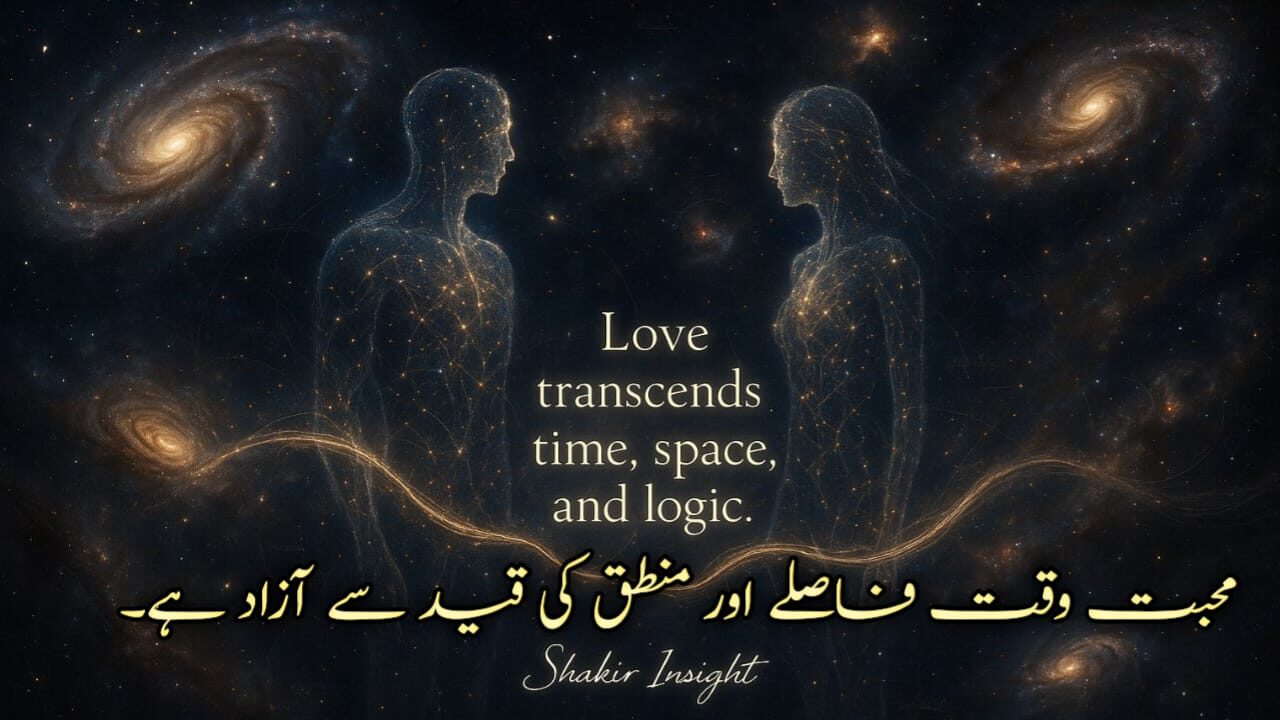
Love Beyond Emotion: A Scientific Exploration of Neuroscience, Evolution, Philosophy, and Quantum Reality
Love is commonly described as an emotion, yet this explanation becomes insufficient when examined through science. Across neuroscience, psychology, evolutionary biology, philosophy, and even theoretical physics, love appears not as a single feeling but as a complex system that shapes human behavior, survival, and meaning. This article presents a structured scientific exploration of love, asking whether love is merely a biochemical response or something far deeper.
From a research-based perspective, love influences decision-making, long-term bonding, and social stability. Understanding it requires moving beyond poetry and entering evidence-based reasoning.
The Neuroscience of Love
Modern neuroscience demonstrates that love is rooted in specific brain circuits rather than abstract emotion alone. Functional MRI studies show that romantic love strongly activates the brain’s reward system, particularly dopamine-rich regions such as the ventral tegmental area and caudate nucleus. Dopamine creates motivation, focus, and craving, which explains why love often feels intense and consuming.

In parallel, hormones such as oxytocin and vasopressin strengthen bonding, trust, and emotional security. These chemicals are released during physical closeness and shared emotional experiences, reinforcing long-term attachment. Interestingly, during early romantic love, activity in brain regions responsible for critical judgment is reduced. This neurological change explains why love can override logic without being irrational; it is biologically adaptive.
Neuroscience therefore frames love as a coordinated brain state designed to promote bonding, commitment, and survival.
Psychological Perspectives on Love
Psychology explains how love patterns develop and persist over time. Attachment theory shows that early childhood relationships shape adult romantic behavior. Secure attachment leads to stable love, while anxious or avoidant attachment often produces emotional instability in relationships.
Another influential model is the triangular theory of love, which proposes three core components: intimacy, passion, and commitment. Different combinations of these components produce different forms of love, from infatuation to lifelong partnership. Research consistently shows that lasting love depends less on passion and more on emotional safety, communication, and trust.

From a psychological standpoint, love is not random. It follows identifiable patterns shaped by cognition, memory, and emotional regulation.
Love Through Evolutionary Biology
Evolutionary biology approaches love as an adaptive mechanism rather than a purely emotional experience. Human infants require prolonged care, making pair-bonding evolutionarily advantageous. Romantic love evolved as a biological system that encourages parents to remain together long enough to raise offspring successfully.
Love increases cooperation, reduces abandonment, and stabilizes social groups. Traits associated with love—such as bonding, jealousy, and sacrifice—exist because they historically improved survival. From this perspective, love is not optional; it is encoded into human nature.
However, evolutionary explanations clarify why love exists, not why it feels meaningful. For that, philosophy becomes essential.

Philosophical Interpretations of Love
Philosophers have long argued that love transcends biological explanation. Plato viewed love as a force that drives humans toward truth and beauty, while Aristotle emphasized love as deep friendship rooted in shared virtue. Later philosophical traditions described love as ethical responsibility and recognition of another person’s intrinsic value.
Philosophy highlights an essential insight: humans do not love merely to reproduce or survive, but to connect, understand, and overcome existential isolation. This explains why love often persists even when it brings suffering rather than advantage.
Philosophically, love is where biology ends and meaning begins.
Love and Quantum Reality: Careful Scientific Speculation
Quantum physics does not directly explain emotions, yet it challenges classical assumptions about reality itself. Concepts such as non-locality and entanglement show that connection can exist beyond distance and linear causality.
Some theorists cautiously speculate that consciousness—and possibly emotional connection—may involve processes not fully described by classical physics. While claims that directly link love to quantum mechanics lack empirical evidence, the comparison is intellectually valuable. Love, like quantum reality, resists reduction into simple components.
A scientifically honest position is necessary: quantum physics does not prove love transcends space and time, but it reminds us that reality itself is deeper and stranger than classical models suggest.
Conclusion: Is Love More Than Emotion?
Across scientific and philosophical disciplines, one conclusion becomes clear. Love cannot be reduced to a single explanation. Neuroscience reveals its biological power, psychology explains its behavioral patterns, evolution clarifies its survival role, philosophy uncovers its meaning, and physics humbles our understanding of reality.
Love is not irrational.
Love is not weakness.
Love is not merely emotion.
Love is a complex system—biological, psychological, social, and possibly fundamental—that shapes human existence at every level.
Author
Shakir Insight
A science-focused thinker exploring neuroscience, philosophy, human behavior, and the deeper structure of reality.