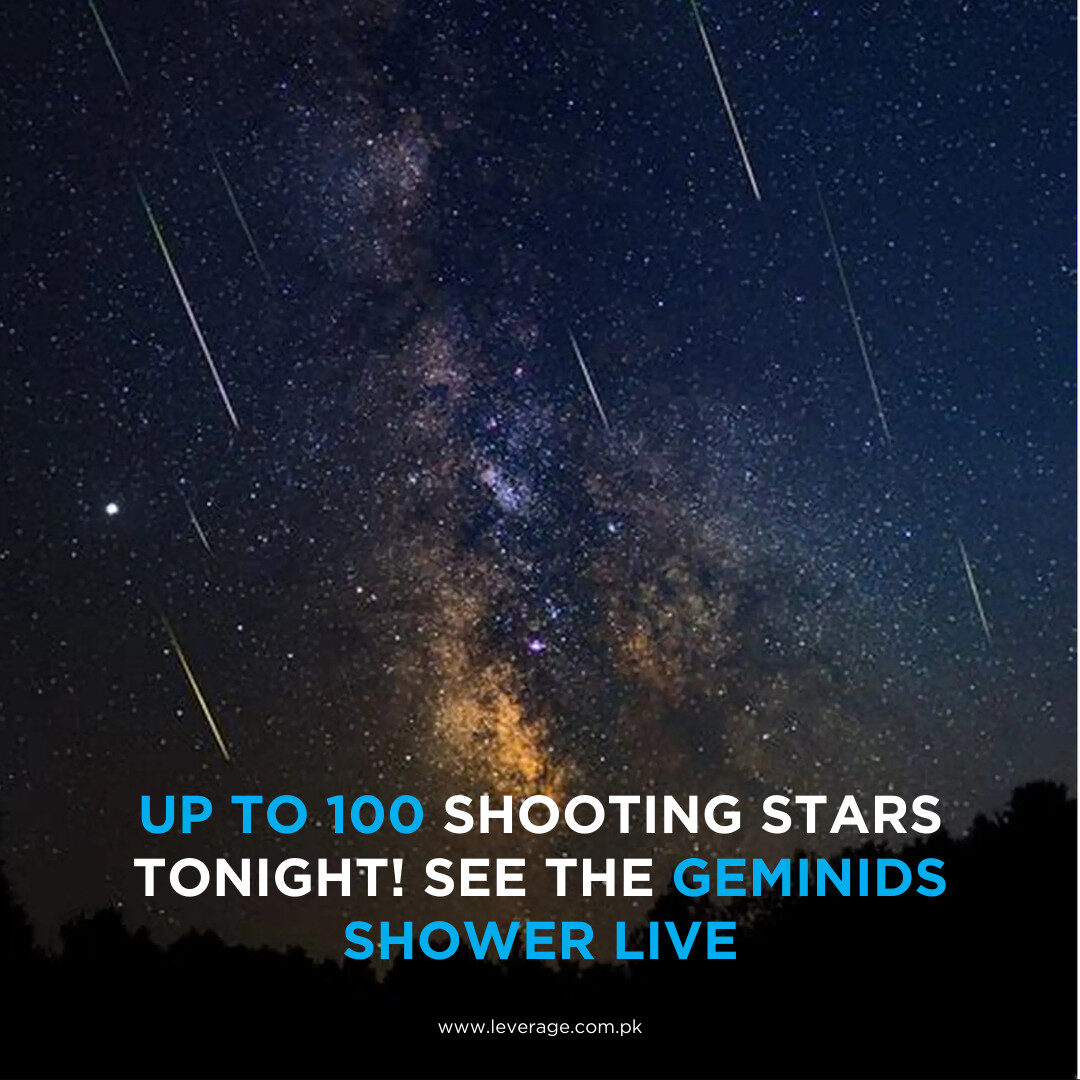
Geminid Meteor Shower 2025: A Spectacular Night of Shooting Stars
Tonight, the sky will host one of the most breathtaking celestial shows of the year: the Geminid Meteor Shower, peaking on the night of December 13–14, 2025. If the sky is clear, anyone with bare eyes can witness this natural spectacle. In the best conditions, dozens of meteors will streak across the night sky, creating a dazzling “light rain” effect. This rare astronomical event is not just beautiful—it’s scientifically fascinating and a perfect opportunity for stargazers, astronomy enthusiasts, and families to experience the wonder of the universe firsthand.

What is the Geminid Meteor Shower?
The Geminid Meteor Shower is not composed of breaking stars. Instead, it consists of tiny rocky particles called meteoroids. When these particles enter Earth’s atmosphere at high speed, friction with the air causes them to burn, producing bright streaks of light in the sky. These are popularly known as shooting stars or meteors.
Unlike many other meteor showers that originate from comets, the Geminids are caused by an asteroid named 3200 Phaethon. This unique source makes the meteors brighter and more easily visible, offering an even more spectacular show than typical meteor showers.
How Many Meteors Can You See?
- Normal conditions: 40–60 meteors per hour
- Ideal dark-sky conditions: Up to 80–100 meteors per hour
⚠️ The number of visible meteors depends heavily on the light pollution in your area. Less artificial light = more meteors.
Radiant Point: Where to Look
The Geminid meteor shower radiates from the Gemini constellation, near the twin stars Castor and Pollux. This is called the radiant point, the apparent origin of the meteors.
Tonight, Jupiter will also be shining brightly near this region. If you notice an extremely bright “star,” that’s likely Jupiter — and shooting stars may appear near it.
Best Way to Watch
- Find an open, dark area away from city lights.
- Turn off all phones and artificial lights.
- Lie down and look up at the sky.
- Allow your eyes 20–30 minutes to adjust to the darkness.
No telescope or binoculars are needed — just your eyes.
Conclusion
This is a rare opportunity to witness one of nature’s most stunning astronomical events. The sky tonight will silently tell the story of the universe, and a few minutes of attention could leave a lifelong impression. Don’t miss it!